
What It's Like to Be Here
For many people, booking an appointment is the easy part. Walking through the door can be something else entirely.
You may arrive carrying questions you've had for years. You may have seen multiple practitioners. You may know exactly why you've come, or you may simply know that something doesn't feel quite right anymore.
You don't need to arrive with the right words. That's something we'll discover together.
One of the things I hear most often is, "I've never been asked questions like this before." That makes sense.
Our first conversation isn't simply about symptoms. It's about understanding you as a whole person: your story, your health, your relationships, your work, your environment, your patterns, what restores you, and what has been quietly asking for your attention.
We'll be listening for patterns rather than searching for isolated problems, because our bodies often make much more sense when we step back and look at the whole picture.
Sometimes those conversations stay practical.
Sometimes they become unexpectedly emotional.
Occasionally, tears arrive long before either of us expected them.
They don't arrive because something has gone wrong. They often arrive when someone finally feels safe enough to let go of holding it all alone.
Nothing needs to be performed here. You don't need to have the right answers, the right words, or the energy to hold everything together. You are welcome exactly as you are.
There is room for laughter, silence, curiosity, uncertainty, the occasional well-earned expletive, and everything in between.

For many people, a liver span assessment is the first time they've thought about their liver in years. It's a small but meaningful way we learn more about how your body is functioning as a whole. If our findings suggest we should explore further, we'll talk together about the next appropriate step, whether that's blood work to better understand your liver function or, when indicated, a referral for diagnostic imaging.
Where observation becomes understanding
A thorough physical examination is one of my favourite parts of naturopathic medicine. Like a health detective, I'm not searching for what is wrong but looking at your physical as an opportunity to become curious about what your body has been communicating all along.
Just as your story begins to unfold like a constellation during our conversation, the physical examination adds another layer of understanding. Together, we explore how your body is functioning; not simply looking for problems, but noticing patterns, strengths, adaptations, and clues that help us understand the bigger picture.
This may include listening to your heart and carotid arteries, assessing circulation, breathing, posture, movement, reflexes, balance, skin, nails, eyes, muscles, connective tissue, lymphatic flow, scars, joints, and abdominal health. Every observation becomes part of a conversation rather than an isolated finding.
Some of my favourite moments happen when curiosity takes over and someone leaves understanding their body just a little differently than when they arrived.
"I've always wondered why my nails grow like this."
"Is that normal?"
"How far should I be able to see out of the corner of my eye?"
"I've had this scar for years. Could it still matter?"
"My tongue tells you that?"
"What does my balance have to do with healthy aging?"
Those questions are always welcome.
I believe understanding your body builds confidence in living within it. The more we understand how your body has adapted, communicates, and compensates, the more equipped you become to make thoughtful choices that support not only a longer life but a fuller one.
Sometimes, and always with your consent, the examination naturally becomes part of your care. A scar that has quietly influenced movement may benefit from gentle release. Lymphatic flow may be encouraged. Protective tension may soften through bodywork. An overworked iliotibial band, areas of fascial restriction, or changes through pregnancy and postpartum may become part of our conversation and, when appropriate, part of your treatment.
Nothing is ever done to you. Everything is done with you.
The examination is a shared exploration. Your observations, questions, and lived experience are just as important as mine.
Because when we understand how your body has adapted, we are far better equipped to choose where we go next.
It's not about becoming hyperaware of every sensation but about becoming more at home in your own body.


Wouldn’t it be wonderful if in the course of a physical you could actually do something constructive about menstrual cramps?

Finding Your Compass
You've probably already done some research.
You may have searched your symptoms online, listened to podcasts, read books, or even asked ChatGPT what might be going on.
Curiosity is always welcome here. Information is a wonderful place to begin. So is a blank slate.
Understanding is something else entirely.
Together, we'll gather what we've learned through your story, our conversation, your physical examination, your health history, and, when appropriate, laboratory testing and current evidence. We also make space for something equally important—your lived experience, your values, your intuition, and the quiet ways your body communicates when we learn how to listen.
I call this process Compass Finding.
Rather than beginning with a predetermined protocol or a favourite modality, we begin with a different question:
What is your body asking for today?
Sometimes the answer is clear.
Sometimes we discover it together.
Over the years, I've learned to notice patterns; those subtle moments when the body settles into a quiet "yes," or gently lets us know something isn't the right fit. It's not about guessing, and it isn't about choosing intuition over science. It's about allowing evidence, clinical experience, careful observation, and your own lived wisdom to inform one another.
Healing is rarely found in a single answer, it emerges as the constellation comes into view. From there, we choose the next right step together.
That might involve acupuncture, bodywork, nutrition, botanical medicine, movement, laboratory assessment, education, or sometimes simply creating enough space for your nervous system to settle before asking more of it.
The goal isn't to do everything.
It's to move in a direction that feels thoughtful, sustainable, and true to your body.
Where do we go from here?
A Path Forward
One of the most reassuring parts of an appointment is leaving with a clearer understanding of what comes next.
Together, we'll review what we've learned through your story, your examination, and the patterns we've uncovered. We'll discuss what feels most important to address first, explore the options available, and create a plan that reflects both your goals and your current capacity.
No two care plans are exactly alike—you and your capacity, change in dynamic ways.
Some concerns are recent and may respond quickly. An acute injury, for example, may require only a handful of visits to restore movement and function.
Other concerns have been unfolding quietly over years, or even decades. Long-standing digestive symptoms, persistent stress, chronic pain, or patterns that have become woven into daily life often ask for something different: time, consistency, and the opportunity to build change one thoughtful step at a time.
Rather than promising quick fixes, I believe in creating realistic, sustainable care that honours both your biology, your life, and your capacity.
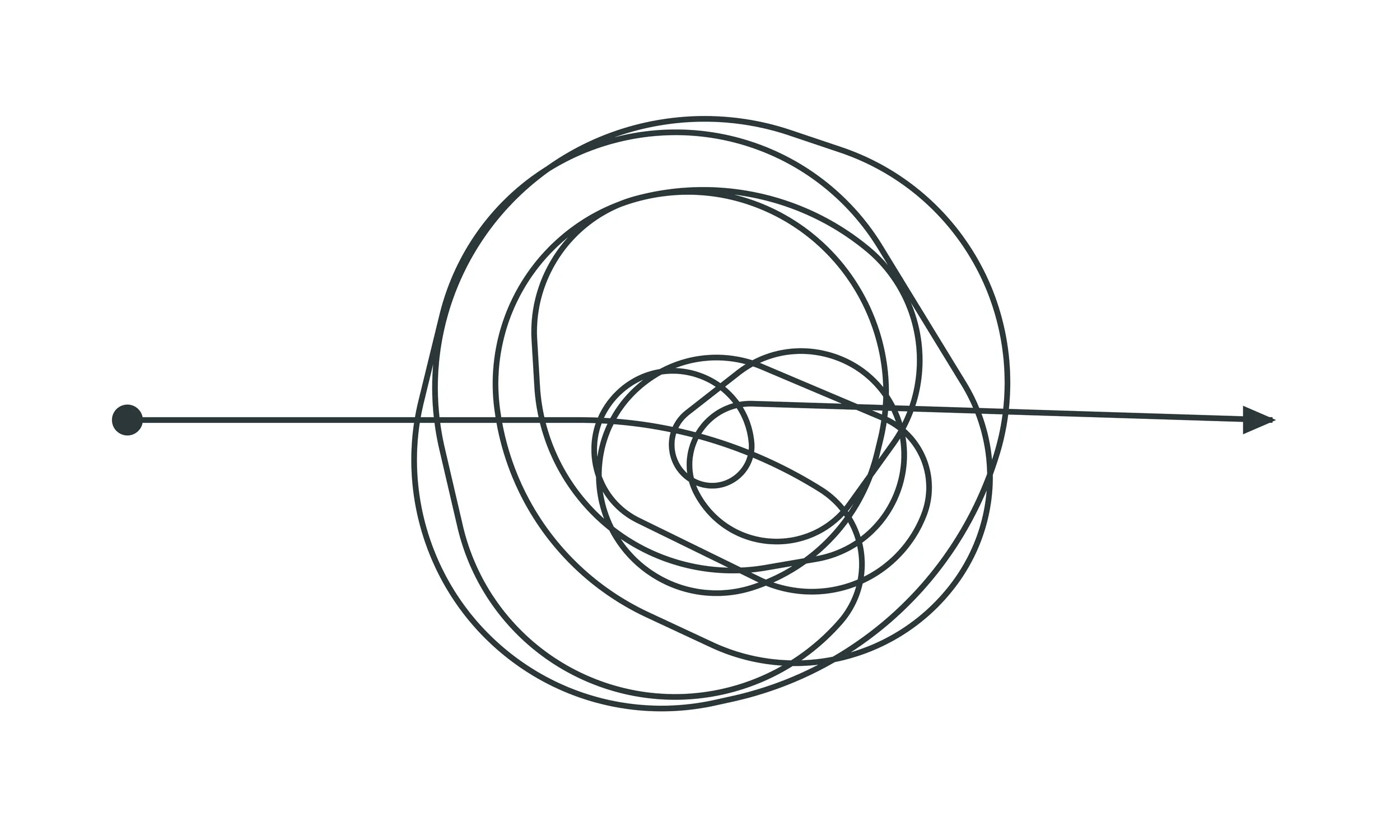
As your health changes, so will your care. We'll continue listening, reassessing, and adjusting together, allowing your plan to evolve as your capacity grows. The process of healing isn't about following a rigid roadmap, but about respecting a dynamic path that is ever-changing and evolving.
It's about having a trusted guide, a clear sense of direction, and the confidence to take the next step.
The S p a c e
Between Us
Everything you've read on this page points to one thing: the space we create together matters.
It shapes the questions we ask, the patterns we notice, the conversations we're willing to have, and the possibilities that begin to emerge.
The most meaningful work we do isn't created in a single appointment. It grows through relationship—through curiosity, honesty, observation, and a shared commitment to understanding your health in its fullest context.
I believe the strongest therapeutic relationships are partnerships. They ask something of both of us: my commitment to listen deeply, think carefully, continue learning, and bring my experience to your care, and your willingness to remain curious, engaged, and open to the process as it unfolds.
There may be moments when we celebrate meaningful progress, moments when we need to pause and reconsider our direction, and moments when life asks us to adapt our plans. All of those moments belong here.
If your circumstances change, if your goals shift, or if something no longer feels possible, I hope you'll tell me. Some of the most important conversations we have are the honest ones. Together, we can decide what feels realistic, what can wait, and what support makes the most sense for this season of your life.
If you're looking for a quick answer or a single appointment to solve everything, I may not be the right practitioner for you.
But if you're looking for thoughtful care, meaningful partnership, and a place where your story can unfold with curiosity, respect, and compassion, I would be honoured to walk alongside you.
Because healing isn't something I do to you.
It is something we make space for, together.